Fixture Removal and Disposal
We pull the old vanity bar, ceiling fixture, or fan, cap the wires safely, and haul the old hardware away. You don't need to rent a dumpster or make a trip to the transfer station.
Bathroom Lighting Installation Scottsdale AZ is what we do every week, from 1980s ranch houses near 85251 to new-build master baths out in 85255. If your vanity light flickers, your recessed cans hum, or you're staring at one bare bulb over the mirror, we wire it correctly, pull the permit when it's needed, and leave you with even, bright light. Most jobs are done in a single visit.
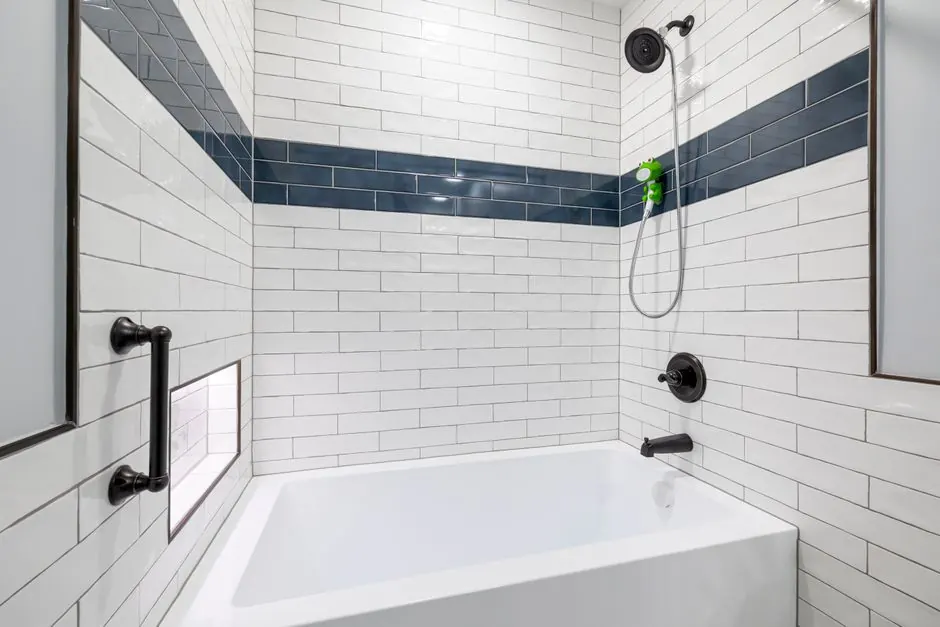
Bathroom Lighting Installation Scottsdale AZ is the trade of running new circuits, boxes, and fixtures for vanity lights, recessed cans, exhaust fan combos, and mirror lighting so a bathroom is bright, safe, and code-correct. It's not swapping a bulb. We kill the circuit, verify with a tester, cut the drywall, set a stud finder on the wall to locate framing, mount the box, pull 12-gauge or 14-gauge wire, and tie into a GFCI-protected circuit. Then we seal the wall, texture, and paint so the patch disappears.
Scottsdale bathrooms take a beating from 110-degree summer heat and hard water, and old fixtures show it first. Cracked lens covers, yellowed vanity globes, and exhaust fans that quit moving air are the three calls we get most. If you're searching for bathroom light fixture installation near me Scottsdale, we cover the whole Valley, including 85258 and 85259. We also replace failing exhaust fans while we're in the ceiling, because poor bathroom ventilation causes mold and mildew long before anyone notices.
Every job is different, but here's what a standard bathroom lighting install covers. If you want to add a circuit, move a switch, or upgrade the exhaust fan, we'll price that separately and tell you upfront. No surprise line items at the end.
We pull the old vanity bar, ceiling fixture, or fan, cap the wires safely, and haul the old hardware away. You don't need to rent a dumpster or make a trip to the transfer station.
We cut in new work boxes, secure them to framing with a stud finder and laser level, and run 12-gauge or 14-gauge cable back to the switch or panel. All connections get wire nuts and proper grounding.
Bathroom circuits land on GFCI protection per NEC requirements. If your panel doesn't have it, we add a GFCI breaker or an upstream GFCI device so the whole circuit is protected, not just the outlet.
We install the dimmer or switch, verify LED compatibility on the spot, and sweep the dimmer from low to high to check for flicker or buzz. If a fixture doesn't dim cleanly, we tell you before we leave.
Every cut gets patched, textured to match the surrounding wall, and painted with moisture-resistant paint. The repair is meant to disappear, not to be a reminder of the job.
We cycle every fixture, run the fan, test the GFCI, and sweep the floor. Drop cloths come up, tools go out, and you get a walkthrough before we pack the truck.
You call, we ask five or six questions: how many fixtures, is there attic access, is the panel full, is there an existing switch leg. That takes about ten minutes and tells us whether this is a half-day job or a full day. We give you a price range on that call, not a vague maybe.
We show up, walk the bathroom with you, and mark fixture heights on the wall with painter's tape. Vanity lights go at eye level, recessed cans get spaced 3 to 4 feet apart on center, and we confirm switch and dimmer locations before anything gets cut.
Breaker off, tester on the wire to confirm dead. Then we cut boxes, drill framing, and run cable. A stud finder and laser level keep the boxes plumb so the finished fixtures sit straight. Rough-in on a typical vanity-and-recessed job runs two to three hours.
We mount the fixtures, land the grounds, and torque the connections. Dimmer compatibility gets checked on the spot, because a cheap LED on a mismatched dimmer will flicker no matter how good the fixture is. Then we patch, texture, and paint the drywall cuts.
Power on, every fixture cycled, dimmer swept from low to high, fan run for five minutes with a tissue test at the grille. We hand you the paperwork, walk you through what we installed, and clean up. You shouldn't find drywall dust anywhere.
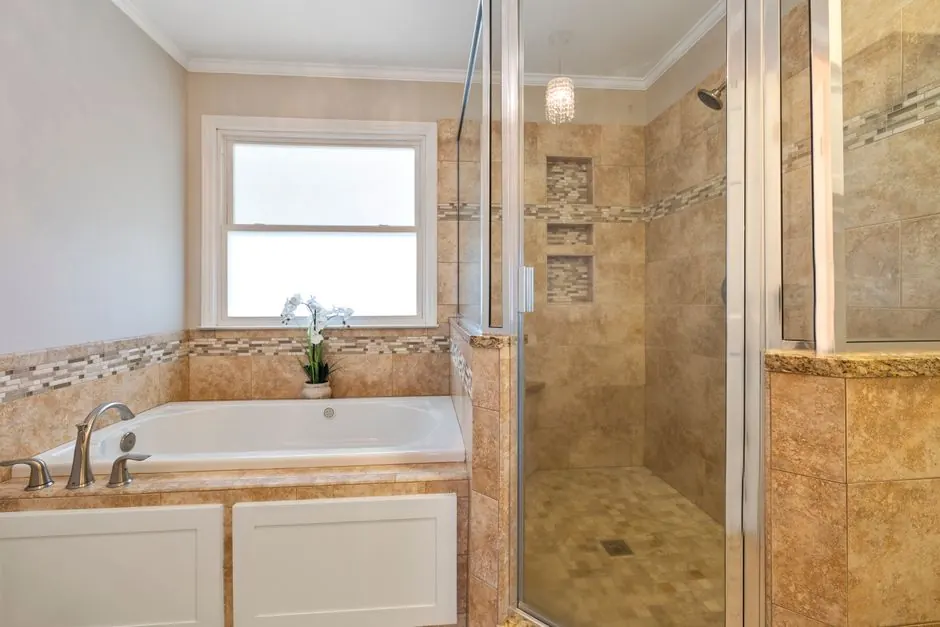
You call, we ask five or six questions: how many fixtures, is there attic access, is the panel full, is there an existing switch leg. That takes about ten minutes and tells us whether this is a half-day job or a full day. We give you a price range on that call, not a vague maybe.
Sets a dead-level line across the wall so two vanity fixtures sit at exactly the same height. It's the difference between a professional install and one that looks off every morning.
Locates framing behind drywall so new work boxes anchor to wood instead of hanging on a plastic drywall anchor that will pull out under the weight of a fixture.
Cuts clean box openings in drywall without cracking the surrounding paper. It also trims the occasional stud when a box needs to move a half inch.
Drives box screws and fixture mounting hardware fast and consistently. We keep the clutch low so we don't strip the screws or crack the fixture housing.
Checks the wall and ceiling around an old fixture for hidden moisture before we close anything up. If there's a slow leak from above, we want to find it now, not after the paint dries.
Runs a clean bead of silicone caulk around wet-area fixtures and fan grilles so steam can't slip behind the trim and into the ceiling cavity.
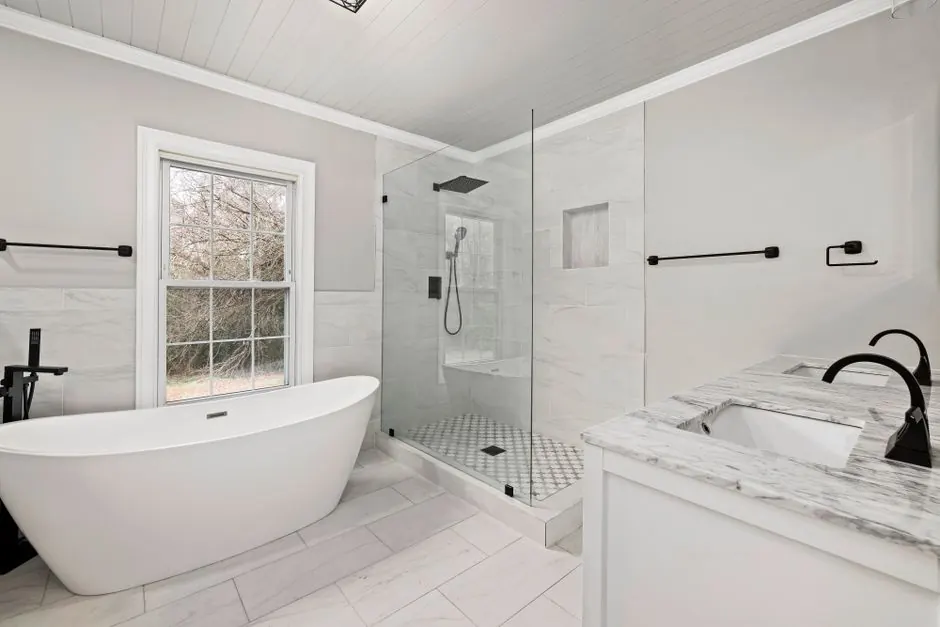
A single 4-foot builder bar light over a 36-inch vanity, one bare bulb in the ceiling, and a fan that hadn't moved air in years. The homeowner was doing makeup in the hallway mirror because the bathroom light was so flat.
After: Two wall sconces at 64 inches, three 4-inch recessed LED cans at 3500K on a dimmer, and a new 110 CFM fan. Measured light at the vanity went from about 12 foot-candles to over 45. The whole job took one day.
Book this service →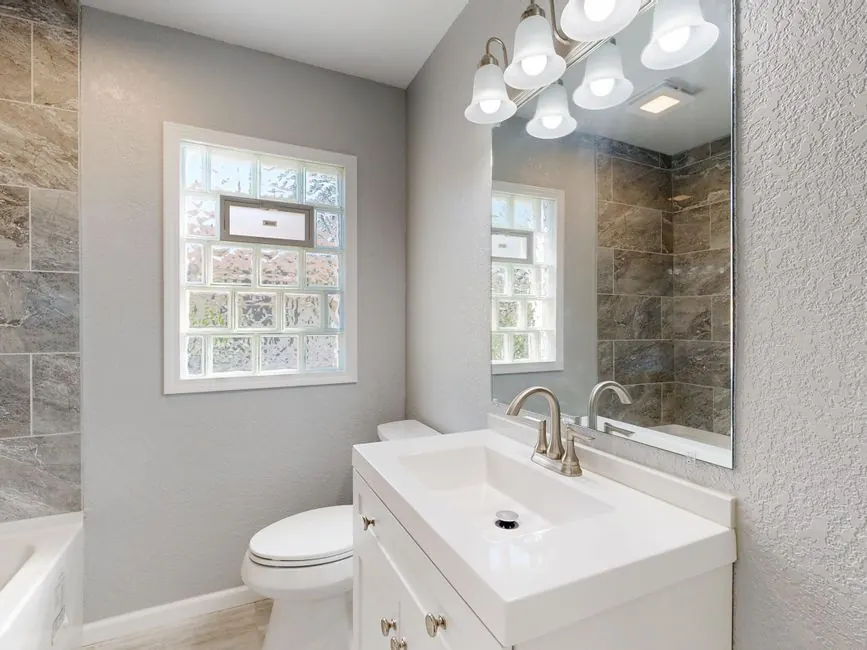
The only light in the shower was spill from the vanity, which left the back corner dark and made the tile look dingy. The old ceiling fixture was a damp-rated unit in a wet location, which is a code violation waiting to be flagged.
After: We installed a wet-rated 4-inch LED can centered over the shower on its own switch, corrected the rating on the old fixture, and added GFCI protection to the circuit. Shower light now reads 38 foot-candles at the drain.
Book this service →
A single overhead fixture cast a hard shadow under the homeowner's eyes, and the dark paint made the small room feel like a cave. Guests kept asking where the light switch was because the room looked unlit from the doorway.
After: Two vertical sconces flanking the mirror at eye level, a dimmable ceiling fixture on a separate switch, and a fresh coat of moisture-resistant paint. The room reads bright from the hall and flattering at the mirror.
Book this service →Most lighting calls start with one symptom and turn out to be something else. Here are the four we see most, and what's usually behind them.
Ask a pro →We test the dimmer against the fixture's driver spec, replace the dimmer with a compatible model, and re-torque every connection in the box. If the neutral in the wall is loose, we find it and fix it on the same visit.
We measure the room, size the fan to at least 1 CFM per square foot, and check the duct run. Most failures are a clogged or undersized duct, not the fan itself. We replace the fan and correct the ducting so it actually moves air.
We isolate the circuit, test each downstream device, and replace the failed GFCI or the moisture-damaged connection. Then we verify the whole circuit holds under load before we close it up.
We patch the old box opening, install a new work box centered on the vanity, and texture and paint the repair. The finished wall looks like the new fixture was always there.
Most single-bathroom jobs run $350 to $1,200 in 2026, depending on fixture count and whether new circuits are needed. A straight swap of one vanity light is at the low end. Adding two recessed cans, a dimmer, and a new exhaust fan pushes toward the top. If the panel needs a new breaker or the attic has no access, add $150 to $400. We give you the number before we start.
Yes, for anything beyond swapping a fixture on an existing box. New circuits, new switch legs, recessed can installs, and exhaust fan wiring all fall under electrical code and require a licensed trade in Arizona. We handle that work in-house, pull the permit when the city requires one, and make sure the circuit is GFCI-protected per NEC rules before we close the wall.
A single vanity light swap takes about 45 minutes to an hour. A full install with two vanity fixtures, three recessed cans, a dimmer, and a new exhaust fan runs one full day, sometimes two if we're cutting into a tiled wall or running a new circuit from the panel. We tell you the window when we quote, and we hit it.
For most Scottsdale bathrooms, two wall-mounted vanity fixtures at eye level plus two or three 4-inch recessed LED cans at 3000K to 3500K is the sweet spot. Add a dimmer so you're not blinded at 2 a.m. In larger master baths, a third can over the shower and a dedicated light in the water closet help. Skip cool-white 5000K bulbs; they make skin look gray.
Licensed, insured, and local to Maricopa County. Call and we'll price your bathroom lighting over the phone, usually in under ten minutes, then get you on the schedule. Same-day quotes on most jobs.
Get a Free Quote +18556124434 →Call +1 855-612-4434 or email [email protected] and we will get back to you the same business day. We answer the phone Monday through Friday, 8:00 to 18:00, and we schedule walkthroughs across Scottsdale and Maricopa County within a few days. Bring your wish list and your budget.